
Paying Mexico’s property tax a few weeks early can knock 25% off the bill.
That was the December discount in a 2016 example from Mexlaw, a Mexican law firm, and each town sets its own.
Property taxes in Mexico differ from a US county bill in other ways too.
Here’s how predial works, how to pay it, and the 3 other taxes you meet when you buy, rent out or sell.
What Is Predial in Mexico?
Predial is the yearly property tax that each Mexican town charges owners of land and buildings. Each town sets its own rules, so two similar homes in different cities can owe different amounts.
The bill comes from the tesorería, the town treasury. Its records come from the catastro, the office that lists each home and its official value.
So when you have a question about your predial, call the tesorería, not the federal tax office.
How Much Are Property Taxes in Mexico?
Property taxes in Mexico have no single national rate, but predial is often quoted at 0.05% to 0.30% of a home’s cadastral value each year. Global Property Guide, a property research firm, calls that range a broad indicative estimate, not a legal rate.
The same firm notes that some towns use a sliding scale instead of one flat percentage.
Your real bill depends on the town, the official value, the land, the building and how you use it. For most owners, predial is a small line in the overall cost of living in Mexico.
The fastest way to get a real number? Ask the seller for last year’s predial receipt before you buy.
How Is Property Tax Calculated in Mexico?
Mexican property tax is your town’s rate applied to the home’s cadastral value, the official value on file at the catastro. Global Property Guide reports that this value may differ substantially from the market or purchase price.
So the price on your contract isn’t the number your yearly tax uses.
Here’s a hypothetical home with a cadastral value of MXN 2,000,000, taxed at 3 points in that quoted range:
| Rate (hypothetical) | Yearly predial on MXN 2,000,000 |
|---|---|
| 0.05% | MXN 1,000 |
| 0.10% | MXN 2,000 |
| 0.30% | MXN 6,000 |
Even at the top of the range, the bill is a small share of the property value. To find your own, look for the cadastral value on your boleta predial, the yearly tax bill.
When Is Predial Due in Mexico?
Predial in Mexico is a yearly bill that most owners pay early in the year, when discounts apply. Mexlaw wrote in 2016 that property tax is due every January.
Its example discount was 25% for paying in December and 20% for paying in January.
Note: That’s one 2016 example, and each town sets its own discount dates every year.
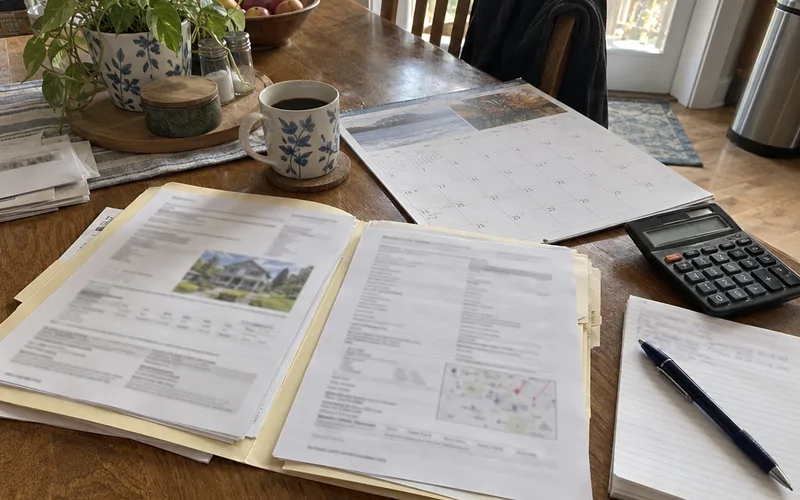
So check this year’s dates on your town’s website before January. While you’re at it, ask about discounts for seniors or people with disabilities.
How Do You Pay Property Taxes in Mexico?
You pay property taxes in Mexico to your town, at the tesorería or online. Either way, you need your clave catastral, your property’s account number.
Here’s the process:
- Find your clave catastral on last year’s receipt, your deed (escritura) or the seller’s closing papers.
- Check this year’s amount online or at the counter.
- Pay before the discount ends, and keep the official receipt.
Can You Pay Mexican Property Taxes Online?
Many Mexican towns let you pay predial online with your clave catastral and a bank card. Search your town’s name plus “pago predial,” and make sure the site is the town’s own before you pay.
If you don’t live in Mexico full time, a property manager can pay it for you. Just ask for the official receipt each year.
What to Bring to Pay in Person
Bring last year’s receipt or your clave catastral, a photo ID and a copy of your deed if it’s your first payment. Here’s what to say at the window: “Vengo a pagar el predial de este año. Aquí está mi clave catastral.”
Keep every receipt, because the notary checks for unpaid predial before you can sell.
Do Foreigners Pay Property Taxes in Mexico?
Yes, foreigners pay property taxes in Mexico at the same rates as Mexican citizens. The tax follows the home, not the owner’s passport.
That includes homes held in a fideicomiso, the bank trust foreigners use to own homes near the coast and borders. The bank holds title, but you pay the predial and the trust’s yearly fee.
Still checking whether Americans can own property where you want to buy? The tax works the same once you own it.
What Taxes Do You Pay When Buying Property in Mexico?
When you buy property in Mexico, the main tax is the ISAI, a one-time tax the buyer pays at closing. Global Property Guide lists property transfer tax at 2.00% to 5.00% of the price.
On top of that, it puts notary fees at 0.50% to 1.50% and total buyer costs at 3.50% to 8.00%.
You don’t pay the ISAI to a tax office yourself. The notario público, a licensed lawyer who runs the closing, collects it while transferring the property.
One cost you can cross off: Mexlaw notes that homes are exempt from Mexico’s 16% IVA. That sales tax applies to commercial property.
Do You Pay Tax on Rental Income in Mexico?
Yes, rent from a Mexican home is taxed by Mexico’s federal tax office. Global Property Guide reports that owners who don’t live in Mexico generally pay 25% of gross rental income.
Under that basic rule, you can’t deduct repairs, management fees or other costs. If your tenant must withhold it, the tax goes to the Servicio de Administración Tributaria (SAT) first.
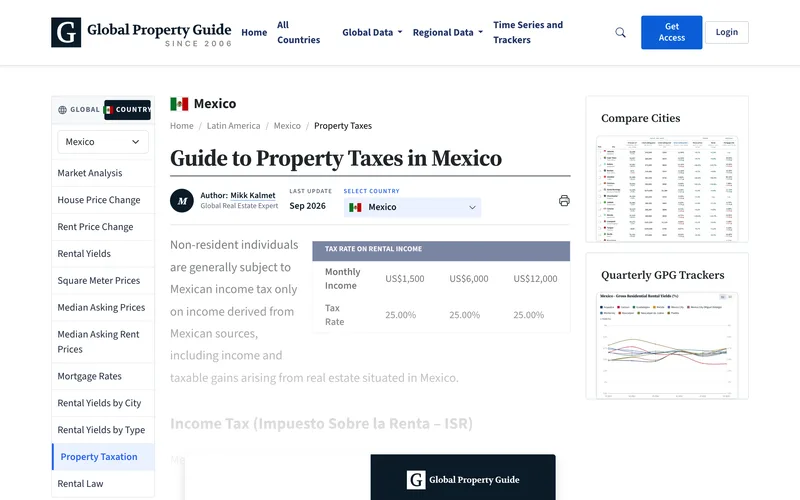
Say you rent out a condo for a hypothetical $1,500 a month. At 25% of gross, $375 goes to Mexican tax each month.
Other setups can be taxed differently, so check the tax implications of owning a rental before you list it.
What Taxes Do You Pay When Selling Property in Mexico?
When a seller who lives outside Mexico sells property there, the tax is generally 25% of the gross price. The seller can choose 35% of the net gain instead.
To use the net-gain option, you need a representative in Mexico and the notary’s help, Global Property Guide reports.
Here’s a hypothetical $300,000 sale:
- 25% of the gross price: $75,000 in tax.
- 35% of a $60,000 net gain: $21,000 in tax.
Run both numbers with the notary before closing. Tax residents follow other rules, covered in taxes for expats, and the capital gains tax guide has more math.
Mexican Property Taxes at a Glance
Mexican property owners face up to 4 taxes, depending on whether they’re buying, owning, renting out or selling:
| Stage | Tax | Paid to |
|---|---|---|
| Buying | ISAI | The notary, at closing |
| Owning | Predial, every year | Your town |
| Renting out | Income tax (ISR) on rent | SAT |
| Selling | Income tax (ISR) on the sale | SAT, through the notary |
Predial is the only one every owner pays every year, and it’s usually the smallest. The big money goes to closing and sale taxes, so plan for them before you make an offer.
Your Next Step
Predial is easy to manage once you know your clave catastral and your town’s discount dates.
This week, get the clave catastral and last year’s receipt for the home you own or want to buy.
Then check the risks of buying in Mexico and plan the rest of your move from the US.
Frequently Asked Questions
Do Mexican citizens pay property taxes?
Yes, Mexican citizens pay property taxes through the same yearly predial as foreign owners. The bill is tied to the property’s record at the catastro, so nationality doesn’t change it.
Are property taxes in Mexico lower than in the US?
Property taxes in Mexico are often lower than US property taxes on a similar home, but each town sets its own predial. To compare, divide each yearly bill by the home’s value.
Do I have to pay US taxes on my Mexico property?
Owning a home in Mexico doesn’t create a US property tax bill, because predial goes only to the Mexican town. Rent and sale profits still belong on your US return, so ask a cross-border tax preparer about credit for Mexican tax paid.
What happens if you don't pay property taxes in Mexico?
Unpaid property taxes in Mexico stay with the property, and a notary won’t close a sale until the debt is cleared. Pay every year and keep the receipts.
Is owning property in Mexico a good idea?
Owning property in Mexico can be a good idea when the yearly predial fits your budget and the title is clean. The bigger risks sit in the purchase itself, so check the land’s legal status before you sign.