

A $2,000 monthly budget becomes about 35,541 Mexican pesos in Mexico.
That’s at the mid-market rate a currency comparison site listed in September 2026. It’s also why so many Americans ask whether Mexico is a good place to live.
But send that same $2,000 through a typical bank, and you can lose more than 1,100 of those pesos every month.
So the real answer is less about Mexico and more about how you move there: your income, your city, your Spanish and your plan.
Below you’ll get the pros, the cons, the money math, the safety checks and a simple way to test life in Mexico before you commit.
Start where your situation points you:
- Retiring on a pension or Social Security? The fit section and the cost section matter most.
- If safety is your first worry, read the safety section, then check the advisory for your state.
- Torn between the beach and the mountains, the weather table settles most of that debate.
- Earning a US salary remotely, your biggest win is how you move your money.
Is Mexico a Good Place to Live?
Mexico is a good place to live for people who bring US dollar income and pick their city carefully. For them, daily life usually costs less, the food and culture are a big upgrade, and the United States is a short flight away.
That’s a conditional yes, and the conditions do most of the work.
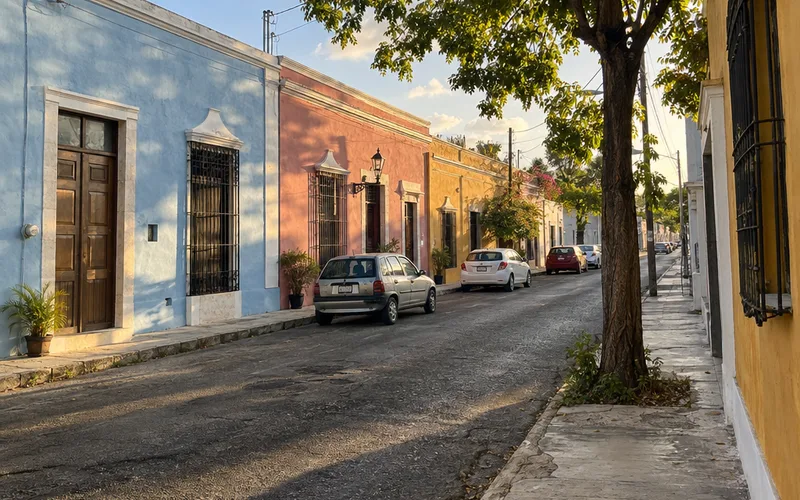
Think of Mexico less as one place and more as many very different places that share a currency, a language and a passport stamp. A quiet street in Mérida, Yucatán and a busy corner of Mexico City feel like different countries.
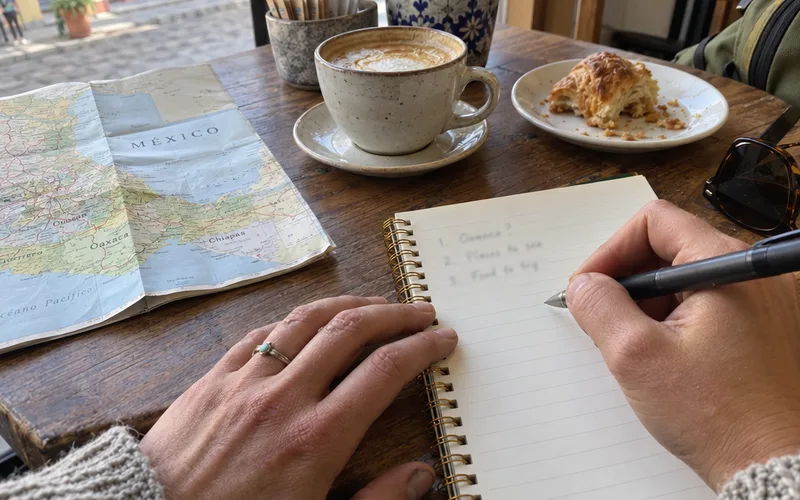
The 3 Questions That Decide It
Before you weigh any pros and cons, answer these 3 questions honestly:
- Where does your money come from? A pension, Social Security, savings or a remote US job makes Mexico work. Needing a local job makes it much harder, because Mexican salaries are far lower than US pay.
- What kind of place do you want? A big city, a small colonial town and a beach area each give you a different cost, climate and safety picture.
- Why are you moving? Retirement, remote work and family each point to different cities and different trade-offs.
Your answers decide which of the pros below you’ll actually feel. They also decide which cons you can live with.
Here’s an example:
Say you’re a remote worker paid in USD who loves cities. Mexico City or Guadalajara could feel like a promotion, with great restaurants and plenty of buses and taxis.
Now say you’re a retiree who hates noise and heat. The same cities could wear you out, while a cooler highland town would suit you far better.
The country is the same, but the answer flips with your situation. So keep your 3 answers in mind as you read the rest of this guide.
If you already know you want to go, the step-by-step plan for moving to Mexico from the US covers the residency process and paperwork in the order you’ll face them.
Pros and Cons of Living in Mexico at a Glance
The pros and cons of living in Mexico come down to one trade. You usually get more space, food, culture and free time for your money, and you give up some convenience, speed and predictability.
Each part of daily life compares with the United States like this:
| Area of life | Often better in Mexico | Often harder in Mexico |
|---|---|---|
| Money | Dollars buy more | Bank rates eat savings |
| Food and culture | Fresh, local, social | Few US brands |
| Climate | A region for any taste | Heat, humidity, storms |
| Safety | Calm in many towns | Varies by state |
| Paperwork | Few daily forms | Slow offices, Spanish |
| Healthcare | Private care options | Plan coverage first |
| Convenience | Walkable centers | Mail, cash, outages |
Treat that table as a checklist, not a verdict. A con on that list only matters if it hits the city and lifestyle you’ve chosen.
So circle the 2 rows that worry you most. Those are the ones to test on a trial stay, which the last section of this guide walks you through.
The Biggest Pros of Living in Mexico
The biggest pros of living in Mexico are lower living costs for dollar earners, a short trip home and a rich food culture. A climate for almost any taste and large expat communities round out the list, though each pro depends on where you land.
1. Your Dollars Usually Stretch Further
Living costs in Mexico are usually lower than in the US for anyone earning in USD. It’s the reason many people look at Mexico in the first place.
In fact, the exchange rate does a lot of the heavy lifting. moneytransfers.com’s comparison page listed a mid-market rate of 17.7705 pesos per US dollar on 28 September 2026.
So a $1,500 Social Security check turns into roughly 26,656 Mexican Pesos at that rate. That figure is what you’ll actually spend on rent, groceries and restaurants.
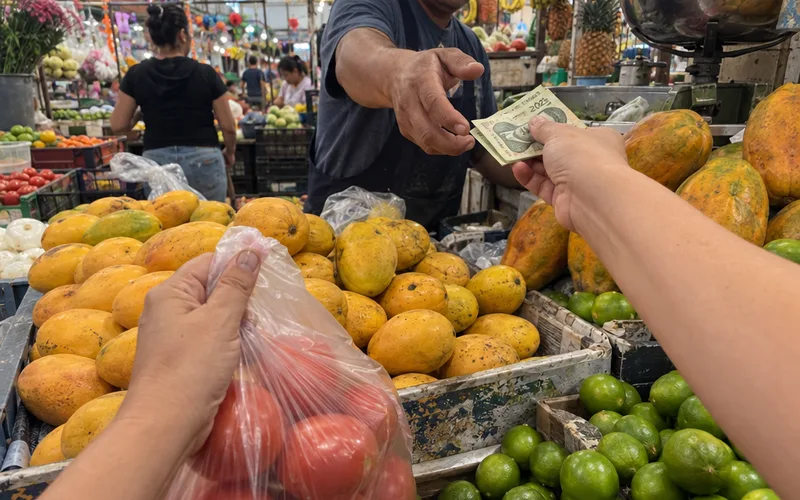
The savings show up most in everyday costs: a meal out, a bus ride, help around the house and fresh market food. They show up least in imported goods, electronics and anything priced in dollars.
Key Takeaway: Mexico is cheaper when you live like a local in a local-priced city. The more your life looks like a US suburb, the smaller the savings get.
2. You’re a Short Flight From Home
Mexico shares a long border with the United States in North America, and many US cities have direct flights to its main airports. That makes visits home, family emergencies and holidays far easier than from Europe, Asia or most of Latin America.
For example, KAYAK’s flight search page listed Tampa to Cancún flights from $275, though fares change by date and season.
That short trip is a big part of Mexico’s appeal for families. You can fly home for a birthday without planning months ahead.
It also keeps your US life running, since doctor visits, bank errands and paperwork back home fit into a long weekend.
3. Food and Culture You Live Inside
Mexican culture is something you live in every day, not something you visit on weekends. Markets, plazas, festivals and long family meals shape the week.
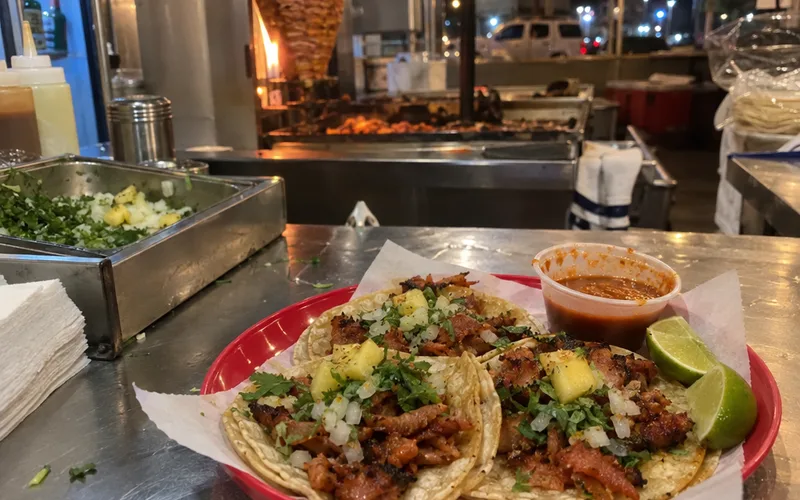
The food alone wins over plenty of expats. Fresh tacos, tamales, mole and local tequila or mezcal cost little, and every region has its own cuisine.
Mexico’s history runs deep, too. You can live a short drive from Maya pyramids in the Yucatán or Aztec ruins near Mexico City, and visit them on an ordinary Saturday.
Some of that culture comes from the land itself. Travel writer Tim Leffel wrote in Perceptive Travel about his own trip to Yucatán state.
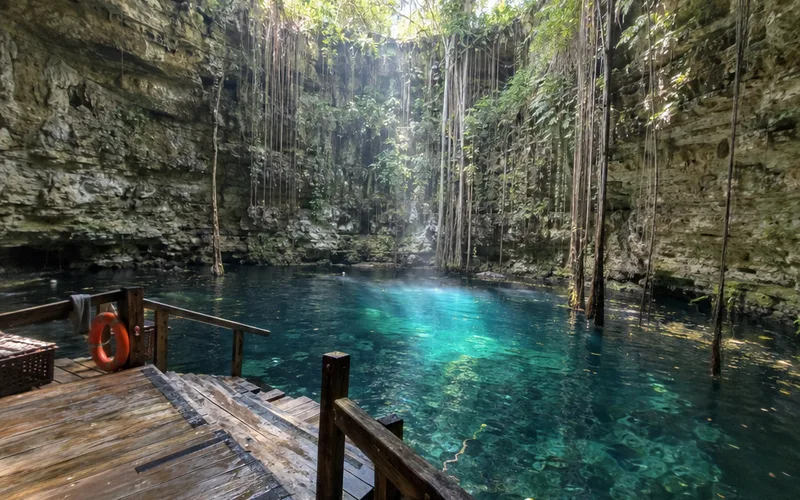
He noted the peninsula has very few rivers above ground but lots of cenotes. Those natural swimming holes give the Maya heartland a landscape unlike anything in a US suburb.
The best part? Art, music and community events are part of normal life, not costly extras.
4. A Climate for Almost Any Preference
Mexico’s climate runs from tropical beaches on the Caribbean and Pacific Ocean coasts to cool highland cities and northern deserts. That means you can pick your weather by picking your city.
Many retirees choose the central highlands for mild days and cool nights. Beach lovers choose the coast and accept heat, humidity and a storm season.
You’ll find a full region-by-region comparison in the weather section. For now, the point is simple: if you hate winters in the US or Canada, Mexico gives you several ways out.
5. Big Expat Communities to Lean On
Mexico has large communities of US and Canadian expats. Places like Lake Chapala, Ajijic, San Miguel de Allende and Puerto Vallarta have clubs, volunteer groups and English-speaking services.
That support makes the first year far less lonely. You can ask a neighbor which doctor speaks English, which bank opens accounts for foreigners or which landlord is fair.
The catch is that an expat bubble can slow your Spanish and raise local prices. Use the community as a landing pad, not a wall.
6. A Slower Pace of Life
Daily life in many Mexican towns moves more slowly than in the US. Shops close for family time, lunch runs long, and neighbors stop to talk.
For people leaving high-stress jobs, that pace is often the biggest surprise. It tends to mean more walking, more home cooking and more time with people.

But slower also means slower service, slower repairs and slower offices. Whether that feels relaxing or maddening depends a lot on your temperament.
The Biggest Cons of Living in Mexico
The biggest cons of living in Mexico are uneven safety, slow paperwork in Spanish, and big-city traffic and pollution. Rising rents in expat hotspots and a cash-heavy daily life add to the list, and each one needs a plan before you move.
1. Safety Varies by State, City and Even Block
Safety in Mexico varies sharply by state, city and neighborhood. Some areas see serious cartel violence and extortion, while many expat towns feel calm day to day.
So there’s no single answer to whether Mexico is safe. The safety section below shows you how to check the exact place you’re considering.
2. Spanish and Slow Paperwork
Spanish is the language of daily life in most of Mexico, from your lease to your doctor’s office. Outside a few expat hubs, many people you deal with won’t speak much English.
Government offices and immigration bureaucracy can also move slowly. Immigration visits, new bank accounts and utility setups often take several trips and a stack of copies.
Pro Tip: Bring printed copies of everything, plus your passport, every time you visit an office. It saves repeat trips.
3. Big-City Traffic, Pollution and Outages
Big cities such as Mexico City and Guadalajara have heavy traffic, air pollution and the odd water or electricity outage. Those problems hit hardest in older buildings and fast-growing areas.
So ask a landlord direct questions before you sign. Here’s what to say: “How often does the building lose water or electricity, and is there a cistern or a backup tank?”
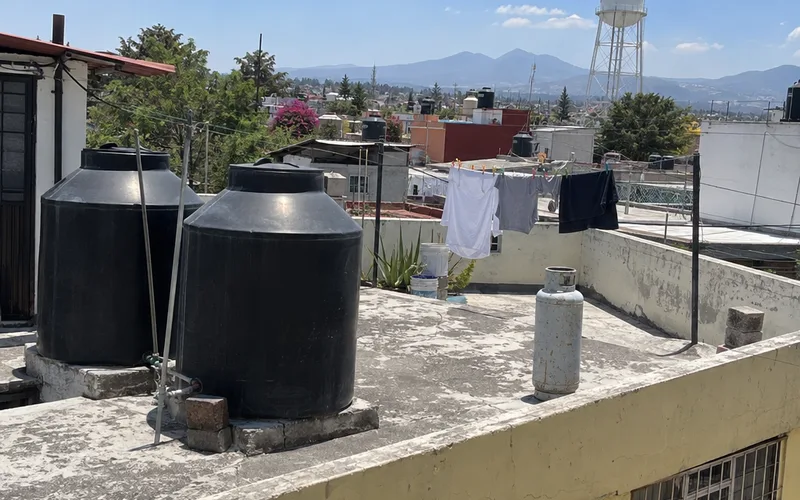
A cistern, called a cisterna, is a storage tank that keeps water flowing when city supply drops. Many buildings have one, and it makes a big difference in daily comfort.
4. Rising Rents in Expat Hotspots
Rents in popular expat and digital nomad areas, such as parts of Mexico City, Mérida and Playa del Carmen, have climbed as more foreigners arrive. Some locals have been priced out of areas now full of short-term rentals.
That means the cheap Mexico of older blog posts may not match today’s listings. Price the exact neighborhood you want, in pesos, before you assume you’ll save money.
If rent is your biggest worry, the guide to the cheapest places to live in Mexico points you to towns where your money still goes further.
5. A Cash-Heavy Daily Life
Cash still runs much of daily life in Mexico, especially at markets, food stands, small shops and for some rents. Cards work well in chain stores, restaurants and big cities.
So you’ll want a bank account or a low-fee way to pull pesos from an ATM. The money section below shows why the exchange rate you get matters more than the fee you see.
6. Mail, Shopping and Convenience Gaps
Mail in Mexico can be slow or unreliable, so many expats use private couriers or mail-forwarding services. Online shopping has improved, but imported items still cost more and take longer.
Drinking water is another daily change. Ask whether your building filters its water, and plan to buy bottled water if it doesn’t.
Note: If you rely on US prescriptions, ask your doctor and pharmacist how you’ll refill them before you move, not after.
7. Noise, Fireworks and Street Life
Noise catches a lot of newcomers off guard. Fireworks, church bells, street vendors, parties and barking dogs are part of daily life in many neighborhoods.
That lively street life is also part of the charm. But if you sleep lightly, it can wear you down fast.
So visit a rental at night and on a weekend before you sign. Ask the landlord whether a church, a party venue or a market sits on the block.
Is It Cheaper to Live in Mexico Than in the US?
Living in Mexico is usually cheaper than in the US for people paid in US dollars, because rent, food and services cost less in pesos. The gap shrinks in expat hotspots and beach towns, and it grows in mid-sized inland cities.
The exchange rate is your starting point. At the 17.7705 mid-market rate listed on moneytransfers.com in September 2026, every dollar becomes almost 18 pesos.
But the rate you actually get can be lower. The same comparison page showed a Wells Fargo bank transfer converting at 17.1835 pesos per dollar, 3.36% worse than the mid-market rate, even with a $0.00 fee.
Here’s what that gap means for a monthly budget:
| Monthly budget | Pesos at 17.7705 | Pesos at 17.1835 | Pesos lost |
|---|---|---|---|
| $1,500 | 26,656 | 25,775 | 881 |
| $2,000 | 35,541 | 34,367 | 1,174 |
| $3,000 | 53,312 | 51,551 | 1,761 |
| $4,000 | 71,082 | 68,734 | 2,348 |
On a $2,000 budget, that’s about $66.06 a month, or roughly $792.77 a year, lost to the exchange rate alone. That money could cover a lot of market groceries.
The rest of your cost of living comes down to rent, which varies more by city than anything else. The cost of living in Mexico guide breaks budgets down city by city.
What Costs Less and What Costs More
Living costs in Mexico drop most for things made and sold locally, and they drop least for imported goods. That pattern matters more than any national average, because it tells you which of your habits will get cheaper.
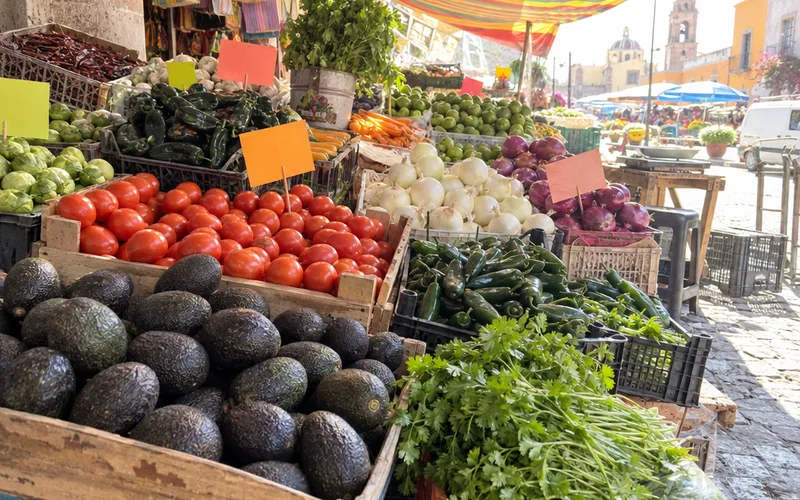
The pattern looks like this:
- Usually cheaper: market produce, street food, local restaurants, buses, haircuts, household help.
- Often similar: big-brand groceries, chain stores, gym memberships in expat areas.
- Often pricier: imported food and wine, electronics, cars and car parts, US brands.
So if your US spending leans on imported products, your savings will be smaller. Shift a few habits to local options, and they grow.
Is $2,000 a Month Enough to Live in Mexico?
$2,000 a month is about 35,541 pesos at the 17.7705 mid-market rate listed in September 2026. Whether that’s enough depends mostly on your rent: it can cover a modest life for one person in many mid-sized cities, but not a beachfront apartment in an expat hotspot.
So test it with your own numbers. Here’s how to do it in about 20 minutes:
- Pick 2 or 3 cities you’re considering.
- Search local rental listings in Spanish, such as “departamento en renta” plus the city name, and note 5 prices for the size you want.
- Subtract the middle rent from 35,541 pesos.
- Ask yourself whether the rest covers food, utilities, transport, health insurance and fun.
If the leftover feels tight, look at a cheaper city before you look at a cheaper apartment. A small change in town can save more than a big change in space.
Remember that what you spend each month isn’t the same as residency proof. Consulates set their own income tests, which the guide to the financial requirements to move to Mexico explains.
How Long Will $100,000 Last in Mexico?
$100,000 equals about 1,777,050 pesos at the 17.7705 mid-market rate listed in September 2026. It lasts 50 months at $2,000 a month or 25 months at $4,000 a month, before returns, inflation or rate swings.
This is the runway at a few hypothetical monthly budgets:
| Monthly spending (hypothetical) | Months $100,000 lasts | Roughly |
|---|---|---|
| $2,000 | 50 | 4 years, 2 months |
| $2,500 | 40 | 3 years, 4 months |
| $3,000 | 33 | 2 years, 9 months |
| $4,000 | 25 | 2 years, 1 month |
Those figures assume your spending stays flat and your money earns nothing. In real life, the exchange rate alone can add or subtract months.
So treat $100,000 as a runway, not a retirement. If you need it to last longer, pair it with a pension, part-time remote income or a lower-cost city.
How to Move Your Money to Mexico Without Losing 3%
The cheapest way to move money from the US to Mexico is a service that converts close to the mid-market rate, because a weak rate can cost more than any fee. On moneytransfers.com’s September 2026 comparison, a $7,000 transfer between Revolut accounts delivered 124,393.43 pesos.
A Wells Fargo transfer of the same $7,000, at its 17.1835 rate, came to about 120,284 pesos. That’s a gap of about 4,109 pesos, or roughly $231.22, on a single transfer.
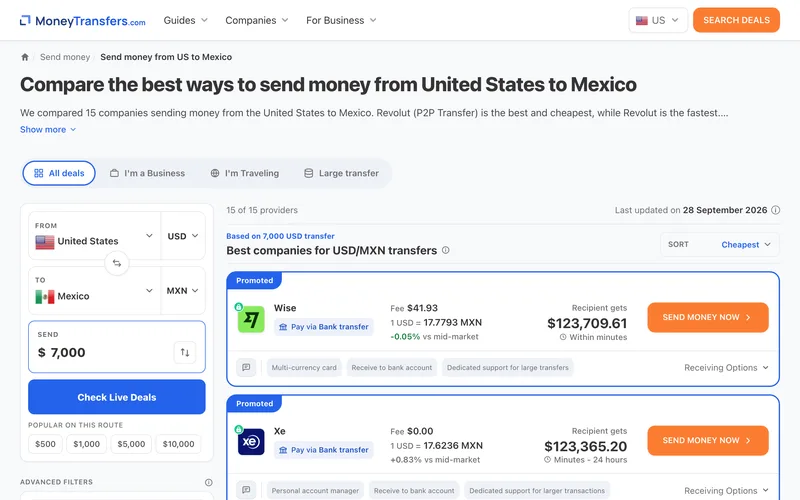
Do that every few months and it adds up to real money.
Here’s why it happens:
Banks often advertise “no fee” transfers. But the fee hides inside the exchange rate, so you get fewer pesos per dollar than the mid-market rate shows.
Set Up Your Money in 4 Steps
- Check the mid-market rate. Look it up the day you plan to send, so you have a fair benchmark.
- Compare at least 3 services for your exact amount. Rates shift with the amount, and a large transfer can get a better deal.
- Count pesos received, not the fee. The service that delivers the most pesos for your dollars is the cheapest one.
- Open a Mexican bank account once you’re a resident. That makes rent, utilities and local bills easier to pay.
You don’t need a Social Security number for every service, either. The same comparison page notes that an ITIN or a foreign passport works with most of the companies it lists.
In other words, the rate is the price. Shop the rate the way you’d shop a mortgage.
Cards, Cash and ATMs
Cards and cash both have a place in Mexico, so plan for each. Use a card with no foreign transaction fee in stores and restaurants, and keep some pesos for markets, taxis and tips.
At ATMs, decline the machine’s offer to convert your withdrawal into dollars. Let your own bank do the conversion instead, because the ATM’s rate is usually the weaker one.
Bank ATMs inside branches or shopping centers are the safer choice. They also make it easier to get help if the machine keeps your card.
Taxes are a separate question from transfers. If you’ll earn or hold money in both countries, read about taxes in Mexico for expats and talk to a tax professional who knows both systems.
Is Mexico Safe to Live In?
Mexico is safe to live in for many expats who choose their state, city and neighborhood with care. Violent crime is still a serious problem in some regions, so the honest answer depends on exactly where you live.
One reader on Reddit asked whether Mexico is “really not that safe like people make it sounds.” That question comes up again and again, and national headlines can’t answer it for your street.
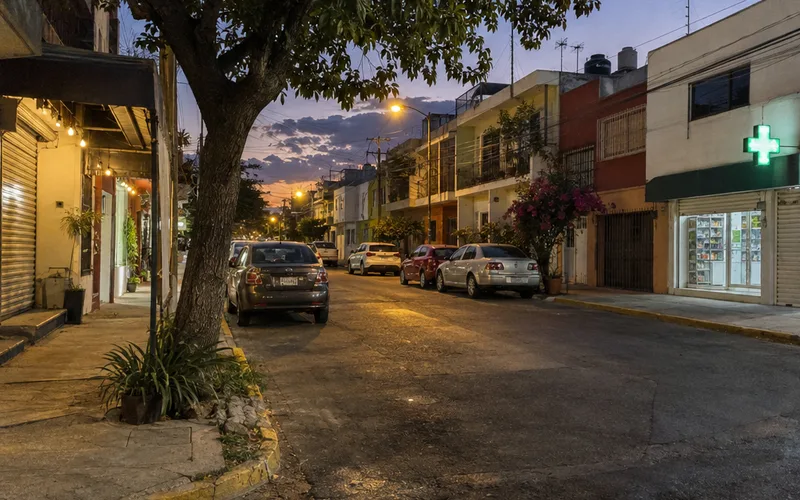
So check the specific place, with a routine that takes one afternoon:
- Read the US State Department travel advisory for your state. It rates each Mexican state separately and lists areas to avoid.
- Search local news for your neighborhood name. Use Spanish terms such as “colonia” plus the neighborhood and city.
- Ask expats who live there now. Local Facebook groups and forums are good for daily-life details, though one person’s story is not a statistic.
- Visit at night and on a weekday. A neighborhood can feel very different after dark.
That routine won’t make any place risk-free. But it replaces fear and rumor with facts about the street you’ll actually live on.
Daily habits cut your risk of crime too. Many expats use ride-hailing apps at night, keep valuables out of sight and avoid long highway drives after dark.
Safety is local, so your research has to be local too. For a deeper look at regions and risks, read whether Mexico is a safe place to live before you pick a city.
Is It Safe to Live in Mexico as a Foreigner or a Woman?
Living in Mexico as a foreigner or a woman is safe for many people in well-chosen neighborhoods, with the same habits you’d use in any big US city. Foreigners mostly face petty theft and scams aimed at newcomers, more than danger aimed at them personally.
Women living alone often add a few extra steps. Share your location with a friend, use app-based rides at night and choose a building with a doorman or a controlled entrance.
Expat women’s groups in most big towns also swap advice on which areas, gyms and taxi services feel comfortable. Join one during your trial stay.
What Is Healthcare Like for Expats in Mexico?
Healthcare in Mexico gives expats a choice of public and private care, and many expats in big cities and expat hubs use private hospitals and clinics. The quality and cost depend on the city, so plan your health insurance before you move rather than after a problem.
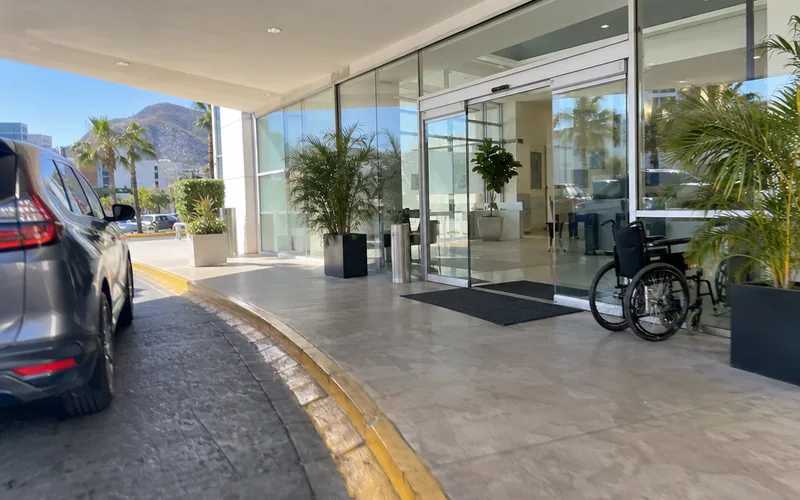
Sort out these 3 things first:
- Your current US coverage. Ask your insurer whether it covers care in Mexico, because many US plans don’t cover care abroad.
- A private health insurance quote. Get at least 2 quotes for your age and the city you’re choosing.
- The nearest hospital. Find out how far it is from the neighborhood you’re testing, and whether staff there speak English.
Here’s a short script for an insurer: “I’m moving to Mexico and will live in [city]. Which hospitals there are in your network, and what’s excluded for someone my age?”
Healthcare in smaller towns may mean only basic clinics. If you have an ongoing health condition, that alone can decide your city.
Note: Ask about waiting periods and pre-existing conditions in writing. Those two lines in a policy matter more than the monthly price.
What Is the Weather Like in Mexico?
Mexico’s weather depends on elevation and coast more than on the calendar. The Caribbean and Pacific Ocean beaches are hot and humid most of the year, the central highlands are mild, and the north has dry desert heat.
Most of the country also has a summer rainy season, when afternoon rain is common. A climate that feels great on a winter vacation can feel very different in August.
The main regions compare like this:
| Region | Example places | Feels like | Best for |
|---|---|---|---|
| Caribbean coast | Cancún, Playa del Carmen | Hot, humid, beachy | Beach and sun lovers |
| Pacific coast | Puerto Vallarta | Warm, green, wetter summers | Ocean views, expat life |
| Yucatán | Mérida | Very hot, humid | Heat lovers, culture |
| Central highlands | San Miguel de Allende, Guanajuato | Mild days, cool nights | Retirees, walkers |
| Western highlands | Guadalajara, Lake Chapala, Ajijic | Spring-like, dry winters | Steady weather |
| North | Monterrey | Dry, very hot summers | Business, US access |
Elevation is the hidden factor. A highland city at high elevation can stay cool when a beach town at sea level is sweltering.
The tropical coasts also have a storm season. If you choose the beach, check the property’s hurricane plan and your insurance before you sign.
So visit in the month you’d like least, not the month you’d like most. That one trip tells you more than any table.
The Nicest Cities in Mexico for Americans
The nicest cities in Mexico for most Americans are Mérida, Guadalajara, Lake Chapala, Puerto Vallarta, San Miguel de Allende and Mexico City. Each suits a different kind of person, so the best one for you matches your budget, climate and pace.
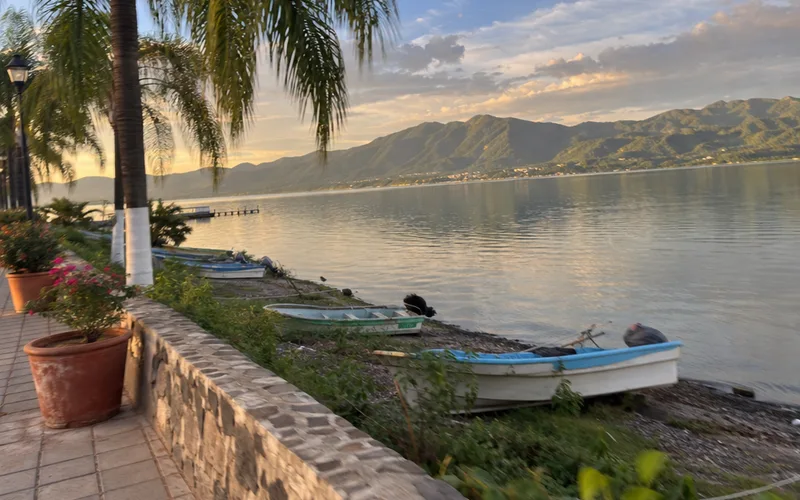
Each one suits a different kind of reader:
- Mérida: calm, colonial, family-friendly and close to Maya sites, for people who handle heat well.
- Guadalajara: a big city with a milder climate, for people who want city life.
- Lake Chapala and Ajijic: retiree towns in Jalisco, for people who want an English-speaking community.
- Puerto Vallarta: beach life with modern services, for ocean lovers.
- San Miguel de Allende: art, festivals and stone streets, for walkers and culture fans.
- Mexico City: world-class cuisine and culture, for people who love big cities.
Each one has trade-offs worth reading about before you visit. Mérida is a good example, since its popularity has pushed up prices in the most wanted neighborhoods, which the Mérida cost of living guide covers.
San Miguel de Allende is another favorite with a real downside list. The pros and cons of San Miguel show why some love it and some leave.
If you want a larger city, read about living in Guadalajara and the pros and cons of Mexico City side by side. Beach lovers can compare the best beach towns to live in instead.
For a broader ranking, the guide to where to live in Mexico compares more cities by cost, safety and lifestyle.
Getting Around Mexico Without a Car
Getting around Mexico without a car is easy in big cities and most expat towns, thanks to buses, taxis, ride-hailing apps and, in a few cities, a metro. Long trips between cities usually go by intercity bus or a domestic flight.
Mexico City has a large metro, a rapid transit system that moves huge crowds for a low fare. Guadalajara and Monterrey also have rail lines, while smaller cities rely on buses.
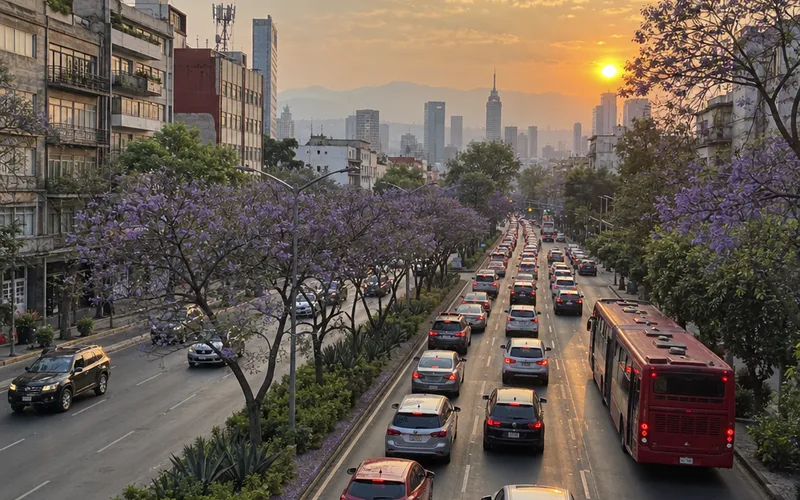
Many expats sell their US car and never miss it. Walkable historic centers, cheap taxis and long-distance buses cover most public transport needs.
But if you choose a spread-out beach area or a lake town, a car can feel close to necessary. Check how far the grocery store, pharmacy and hospital are before you decide.
Pro Tip: Ride the local bus route from your test rental to the market during your trial. If that trip is easy, you probably don’t need a car.
Do You Need to Speak Spanish to Live in Mexico?
You don’t need fluent Spanish to live in Mexico, but you need basic Spanish to live there comfortably. Most landlords, offices, doctors and shops outside expat hubs use Spanish, so English alone costs you money and missed chances.
Even a little Spanish changes daily life. Ordering food, asking for directions and reading a utility bill stop being stressful.
It also protects you. A lease, a medical form or a property document in a language you can’t read is a real risk, so get a professional translation for anything you sign.
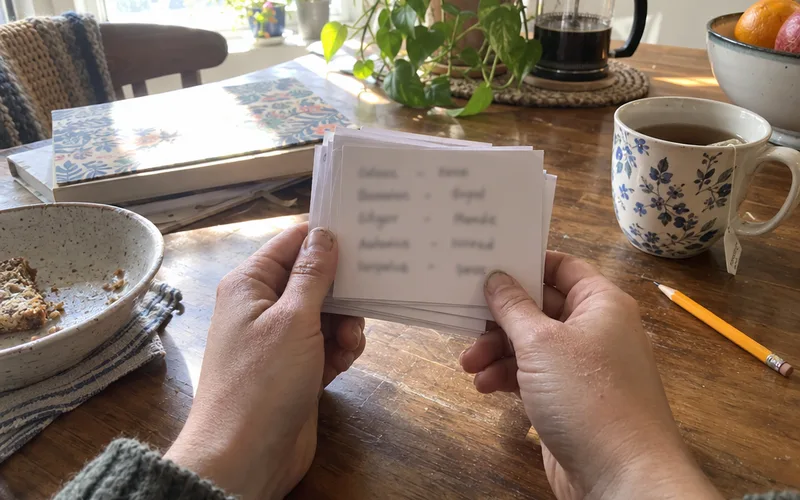
Here’s what I’d do before you move:
- Take a beginner class or use an app for 15 minutes a day for 3 months.
- Learn the words for your daily life: rent, deposit, repair, pharmacy, bus stop.
- Book a few online lessons with a Mexican tutor to learn local phrases.
Once you arrive, keep going with a local class or a language exchange. Daily life in Mexico gets easier with every word you add.
What Does It Take to Live in Mexico Legally?
Living in Mexico long term legally takes a residency visa, which most Americans start at a Mexican consulate in the United States and finish with Mexico’s immigration office after they arrive. Visitors can stay for a while without one, but a visitor stay isn’t a way to live there for good.
There are two main residency visa statuses:
- Temporary residency: for people who plan to live in Mexico for a few years, usually backed by proof of income or savings.
- Permanent residency: for longer-term residents, retirees who qualify and some family ties.
Each consulate posts its own visa requirements, and they can change. So read the visa page of the consulate nearest your US home before you plan anything else.
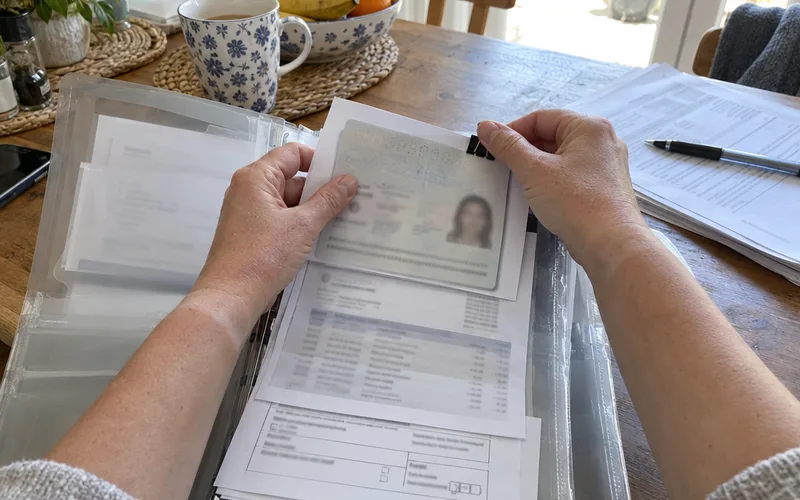
The temporary residency for US citizens guide explains that route step by step. If you plan to work for a Mexican employer, you’ll also need immigration permission to work, which is a separate part of the process.
Can You Buy Property in Mexico as an American?
Americans can buy property in Mexico, but the rules work differently near the coast and borders, where foreigners buy through a bank trust. So rent first, learn the area, and get local legal advice before you buy.
Renting for a year also protects you from a costly mistake. You’ll learn which streets flood, which neighbors party and how far the hospital really is.
When you’re ready, the guide on whether Americans can own property in Mexico covers the trust, the paperwork and the property tax you’ll pay.
Is It Better to Live in Mexico or the US?
Living in Mexico is better than the US for people who earn dollars and value lower costs, food, culture and a slower pace. The US is better for people who need high local wages, fast services and familiar systems, so neither country wins for everyone.
Here’s the deal:
If you earn in USD and spend in pesos, Mexico gives you more breathing room, especially next to a high-cost state like California. That can mean less work, a bigger home or more time with family.
But if you’d earn a Mexican wage, the math flips. Local salaries are much lower than US pay, so moving for a job in Mexico rarely saves money.
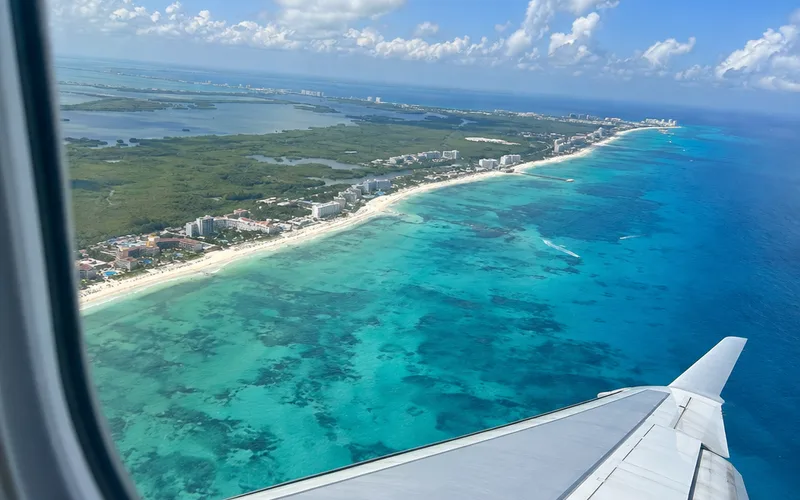
Family and health matter too. Being a short flight from relatives helps, but you’ll still miss some birthdays, and US health insurance often won’t follow you.
Why Do So Many Mexicans Leave If Mexico Is a Good Place to Live?
Many Mexicans leave because local wages are far lower than in the US. An expat who brings dollar income lives a very different economic life in the same country.
A reader on Quora put it bluntly, asking whether Mexico is “a bad place to live” if so many people want to leave. The answer is that both things are true.
A country can be a hard place to earn a living and a good place to spend one.
That’s worth remembering if you move. Your comfort depends on money earned somewhere else, so be a respectful guest in the community that hosts you.
Who Mexico Is a Good Fit For (and Who Should Skip It)
Mexico is a good fit for retirees with steady income, remote workers paid in US dollars and people who want a slower, more social life. It’s a poor fit for people who need a local job, dislike paperwork or depend on US-style convenience.
Find your situation in this table:
| Your situation | Good fit? | First step |
|---|---|---|
| Retiree with a pension | Usually yes | Price health insurance |
| Remote worker paid in USD | Usually yes | Test internet in a trial stay |
| Family with children | Often yes | Visit 2 schools in person |
| Needs a local job | Usually no | Research work permits first |
| Hates paperwork and waits | Often no | Read a residency checklist |
If you’re retiring, the guide to retiring in Mexico’s pros and cons covers healthcare, community and money questions in more depth.
Remote workers should test the internet before anything else. Ask any landlord for a speed test screenshot, then run your own on a video call during your trial week.
Is Mexico a Good Place to Live for Young Adults?
Mexico is a good place to live for young adults who work remotely for a US or Canadian company, because their income goes much further in pesos. It’s a much harder move for young adults who would need a local job, since Mexican wages are far lower.
Cities like Mexico City and Guadalajara draw younger expats with nightlife, coworking spaces and big creative scenes. Smaller towns suit people who want a quiet base and a lower cost of living.
Either way, check your visa options before you plan a long stay. Working remotely while living there still needs the right residency status.
And if you’re on the fence, read real stories about people who regret moving to Mexico. Their reasons often point to exactly what you should test first.
Key Takeaway: The people who thrive in Mexico usually bring their income, choose their city after a trial and learn the language.
How to Test Living in Mexico Before You Move
The best way to test living in Mexico is a 1 to 3 month trial stay in your top city during its least pleasant season. Live on your planned budget in a normal neighborhood, not a hotel zone, so the trial shows you real life.
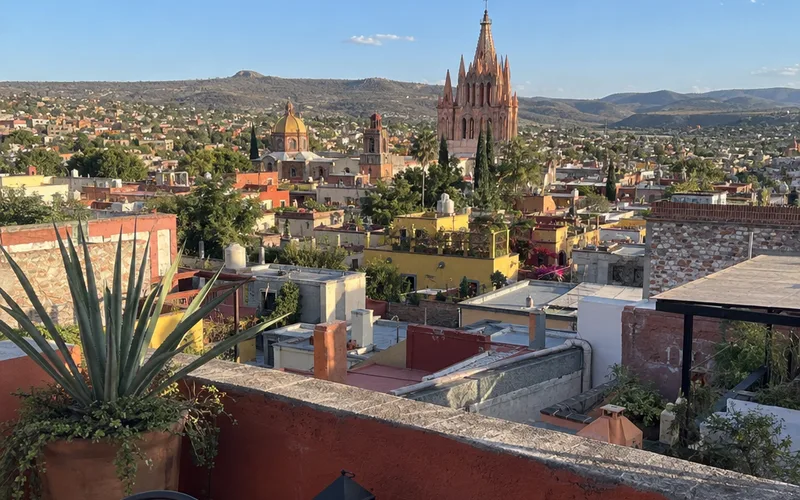
A trial turns a vacation impression into real data. You’ll learn what groceries cost, how loud the street is and whether the heat is bearable.
Step #1: Pick Your Season and Your Neighborhood
Choose the month you think you’ll like least. For most beach towns that’s the hot, wet summer, and for highland cities it can be the dry, dusty spring.
Then book a furnished rental in a residential neighborhood, not a resort area. Your trial should look like your future life, not your last vacation.
Step #2: Live on Your Real Budget
Convert your planned monthly spending to pesos at the current rate and spend only that. Track every expense, from rent to bus fare to a coffee.
At the end of the month, compare your total with your plan. If you went over, find out which category caused it before you blame Mexico.
Step #3: Do the Boring Errands
Pay a bill, visit a pharmacy, ride a bus or the metro, and ask a local office a question in Spanish. These everyday errands show you what the cons really feel like.
Try this script with a rental agent: “Hola, I’m looking for a 1-bedroom apartment for 12 months. What’s the monthly rent, the deposit, and what’s included, such as water, gas and internet?”
The guide to expat housing in Mexico covers leases, deposits and what to check before you sign.
Step #4: Ask the Consulate Early
While you’re testing, read the visa page of the Mexican consulate nearest your US home. It lists the documents and financial proof it wants for temporary residency.
A short email does the job: “Hello, I plan to apply for temporary residency. Could you confirm the current financial requirement and the documents I should bring to my appointment?”
That one email tells you whether your income plan works. If it doesn’t, you’ll know before you sell anything at home.
So, Should You Move to Mexico?
Mexico is worth moving to if you bring your income, pick a city that fits and give yourself time to learn the language. The conditions matter more than the country.
Book a 1-month trial stay in your top city this season, and live on your real budget while you’re there.
Frequently Asked Questions
Is moving to Mexico a good idea?
Moving to Mexico is a good idea when you bring your income with you, have picked a specific city after a trial stay, and can qualify for residency through a Mexican consulate. It’s a risky idea if you’re counting on finding work locally or moving to a place you’ve only seen on vacation.
Can a US citizen move to Mexico?
Yes, a US citizen can move to Mexico by applying for temporary or permanent residency at a Mexican consulate in the United States and finishing the process after arriving. The consulate’s own visa page lists the income or savings proof it wants, so read it before you plan anything else.
What's the best state to live in Mexico?
The best state to live in Mexico depends on the climate and city size you want, but I’d start a shortlist with Yucatán for Mérida, Jalisco for Guadalajara, Lake Chapala and Puerto Vallarta, and Guanajuato for San Miguel de Allende. Check each state’s US State Department advisory before you book a trial stay.
What is the cost of living in Mexico?
The cost of living in Mexico depends mostly on rent in the city you choose, because a beach town full of expats can cost far more than a mid-sized inland city. Price it yourself by converting your monthly spending to pesos and comparing it with local rental listings in two or three cities.
Is Mexico a good place to retire?
Mexico is a good place to retire for many Americans with a steady pension or Social Security income, especially in established retiree communities such as Lake Chapala and Ajijic. Plan your health insurance and residency before you sell anything in the US.
Is Mexico a good place to live for families?
Mexico can be a good place to live for families who earn remotely and choose a city with schools that suit their children, such as an international or bilingual school. Visit the schools in person and ask about tuition, language of instruction and enrollment dates before you sign a lease.