

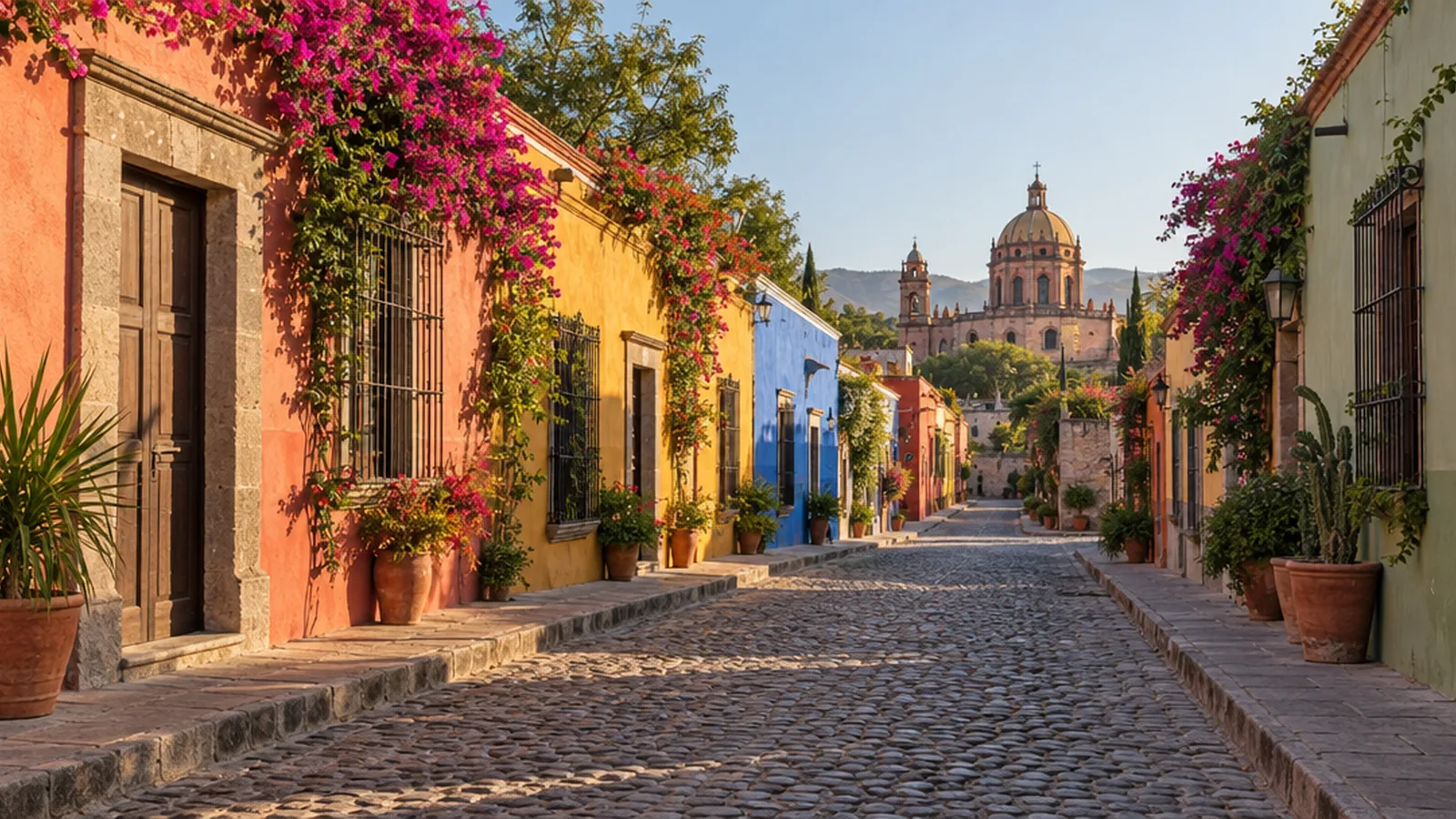
Moving to Mexico from the US is rarely a single decision. It’s a chain of smaller ones about where to live, what life will cost, how safe a place feels, which visa fits, and whether to rent or buy. This section puts those decisions in a practical order and explains each one in plain language, with pointers to the officials and professionals who can confirm the details.
What this section covers
Relocation is about the whole experience of moving to and living in Mexico as an American, whether you’re working remotely, raising a family or planning to retire. It covers big cities like Mexico City, Guadalajara and Monterrey, colonial favorites like Mérida and San Miguel de Allende, and coastal areas from the Riviera Maya and Puerto Vallarta to Baja California and Mazatlán. It also looks at Mexican housing culture, the honest pros and cons of the move, and why some people come to regret it.
The four main sub-topics
The guides in this section are grouped into four main sub-topics. Each one answers a different part of the question “Could I build a life there?”
Cost of Living
Cost of Living compares what daily life costs in Mexican cities and towns, and how that stacks up against life in the US. It looks at rent, groceries, utilities, transportation, healthcare and the extra costs that tend to surprise newcomers. It also explains why prices in tourist-heavy places such as Tulum or Cancún can feel very different from those in cities like Mérida or Monterrey.
Where to Live
Where to Live helps you narrow the map, from beach towns to big cities and from neighborhoods popular with expats to places where you’ll mainly hear Spanish. The guides weigh climate, walkability, healthcare access, community, airport connections and how a place feels outside vacation season. They also give an honest account of the trade-offs in popular choices.
Safety
Safety looks at how to judge whether a state, city or neighborhood suits you. The current US State Department travel advisory for each Mexican state is always the starting point, followed by the local conditions that a national headline can hide. The goal is clear information, not reassurance or alarm.
Retirement
Retirement focuses on Americans planning to spend their later years in Mexico. It covers popular retirement towns, gated and retirement communities, healthcare, budgets, and the pros and cons that matter most once you’re no longer working. It also explains how a retirement income relates to the financial requirements for residency.
Residency and paperwork
Most Americans who stay longer than a visit need either temporary or permanent residency. The process usually starts at a Mexican consulate in the US and finishes with the National Migration Institute (INM) in Mexico. Guides in this section explain the difference between the two paths, the general financial solvency requirements, applying as a couple, and checklists for the move itself. Consulates set and apply their own income and savings thresholds, and those thresholds change, so always check the current requirements with the consulate where you’ll apply.
Owning, renting and selling property as a foreigner
Many people who move to Mexico eventually think about a home of their own. This section explains how that works for Americans, so you know which questions to raise before you sign anything or send money.
Fideicomisos, ejidos and the restricted zone
Article 27 of the Mexican Constitution limits direct foreign ownership of land in the restricted zone, a strip near the borders and the coastline. In that zone, foreigners usually hold residential property through a fideicomiso, a bank trust, and the guides explain how that arrangement works. They also explain ejido land, which is communally held and carries particular risks for buyers.
Taxes, closing and title protection
A purchase in Mexico is closed by a notario público, and the guides walk through the roles of the notary, a real estate lawyer, escrow and title insurance. They cover property taxes, the tax implications of owning a home in Mexico, capital gains tax when you sell, and how your US tax obligations may still apply. Financing options, home insurance and the risks of buying are covered too.
Renting, markets and timeshares
For renters, there are guides on typical rents, expat housing and tenant rights. For buyers, there are looks at regional markets such as Mexico City, Puerto Vallarta, Cabo San Lucas, the Riviera Maya, Mérida and Todos Santos. Timeshares get their own careful treatment, including what they cost, how hard they can be to sell and the taxes involved, along with how property is transferred or inherited.
Before you act
Every guide here is general information, not legal, tax, immigration, financial, brokerage or security advice. Rules, thresholds, exchange rates and prices change, so check the figures yourself before you rely on them. For decisions about your own situation, speak with a Mexican notario público, a licensed attorney, a qualified tax professional and the Mexican consulate, and read the current US State Department advisories.